
This infographic displays data that has been collected after analyzing a survey given to BYU-Idaho students about media. Our findings are summed up in the charts below, including information about the demographics or the population surveyed and other deeper topics such as how bias is seen in the media today.
BYU-Idaho has ranked #1 on the list of most conservative college campuses in the United States. With that background information, we wanted to take a deeper dive into understanding where students rank themselves on the political spectrum, and then subsequently examine how they perceive political bias in the media.
Gender breakdown of participants
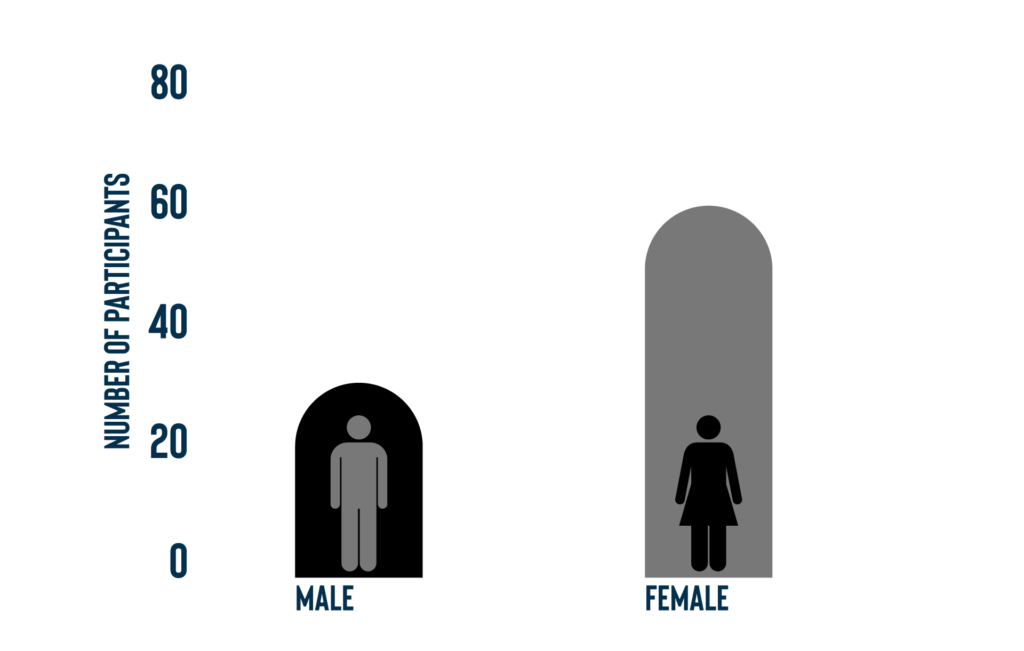
Females made up two-thirds of all survey participants at 63, while males made up 33 of all participants.
Where do students fall on the political spectrum?
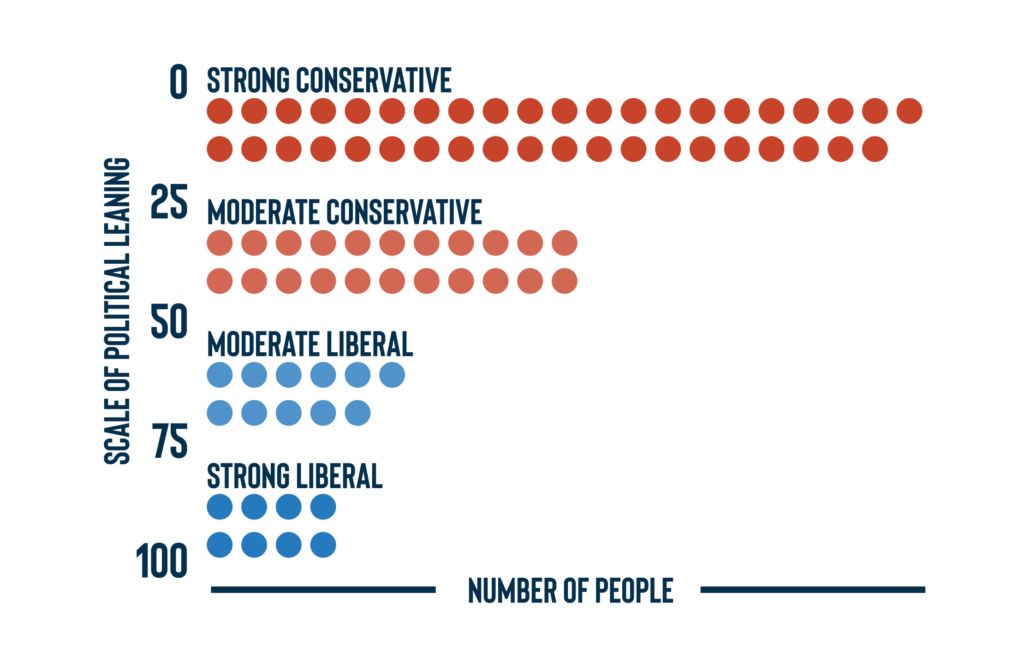
The large majority of the respondents were conservative. Using a spectrum of 0-100, 0 being conservative and 100 being liberal, 76% percent of BYU-Idaho students gave a response lower than 50, showing they fall on the conservative side of the spectrum.
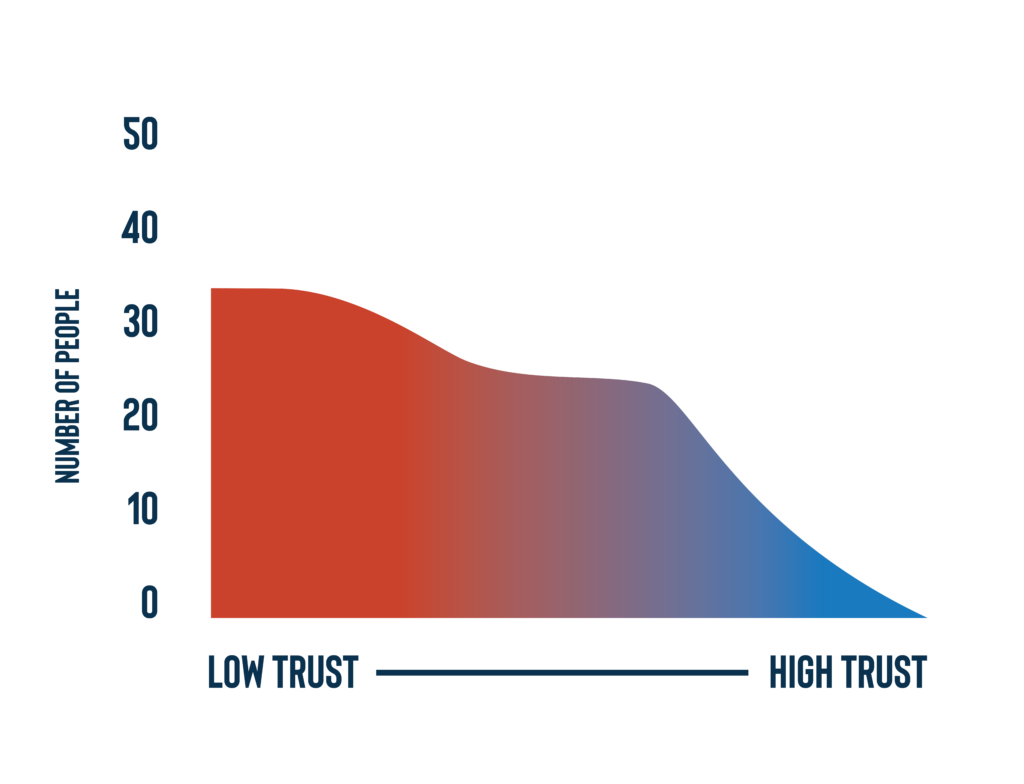
How much do BYU-Idaho students trust the media?
Do students agree the news favors one political party over the other?
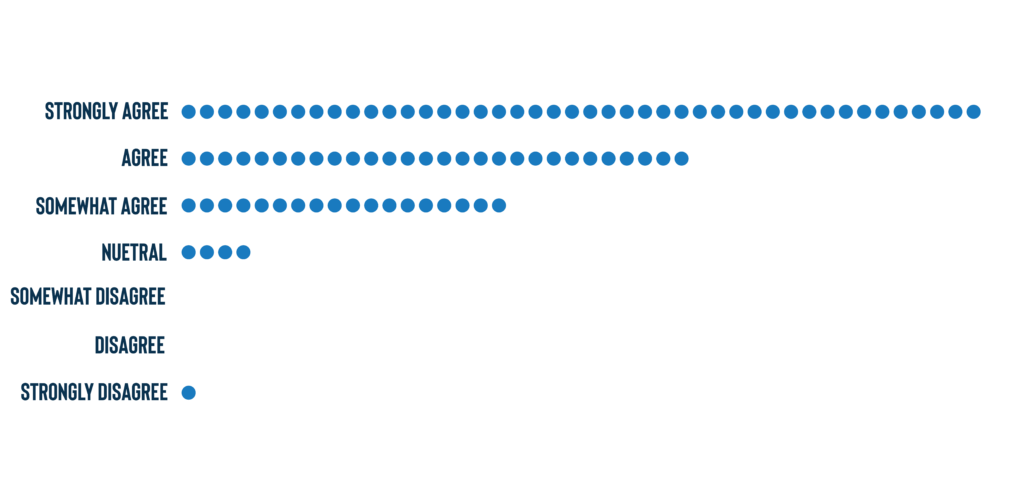
These students expressed a generally low amount of trust in the news, and nearly all agreed the news favored one political party over the other. Most students at BYU-Idaho believe the media favors one political side over the other, at about 94 percent. Just under six percent disagree that the media is biased. Next, we examined the role social media played in students’ news exposure and potential perceived bias.
Do students get their news from social media?

On a scale of 1-7 (1 being strongly agree and 7 being strongly disagree) students reported their agreement with the statement “I get most of my news from social media”. While most students generally reported that they got their news from non-social media sources, conservatives were more likely to use social media as their main news source than liberals. A key factor in how students perceive bias may be what sources they get their news from.
Which brings us to the question –
Who is more likely to believe the news favors one political party over the other?
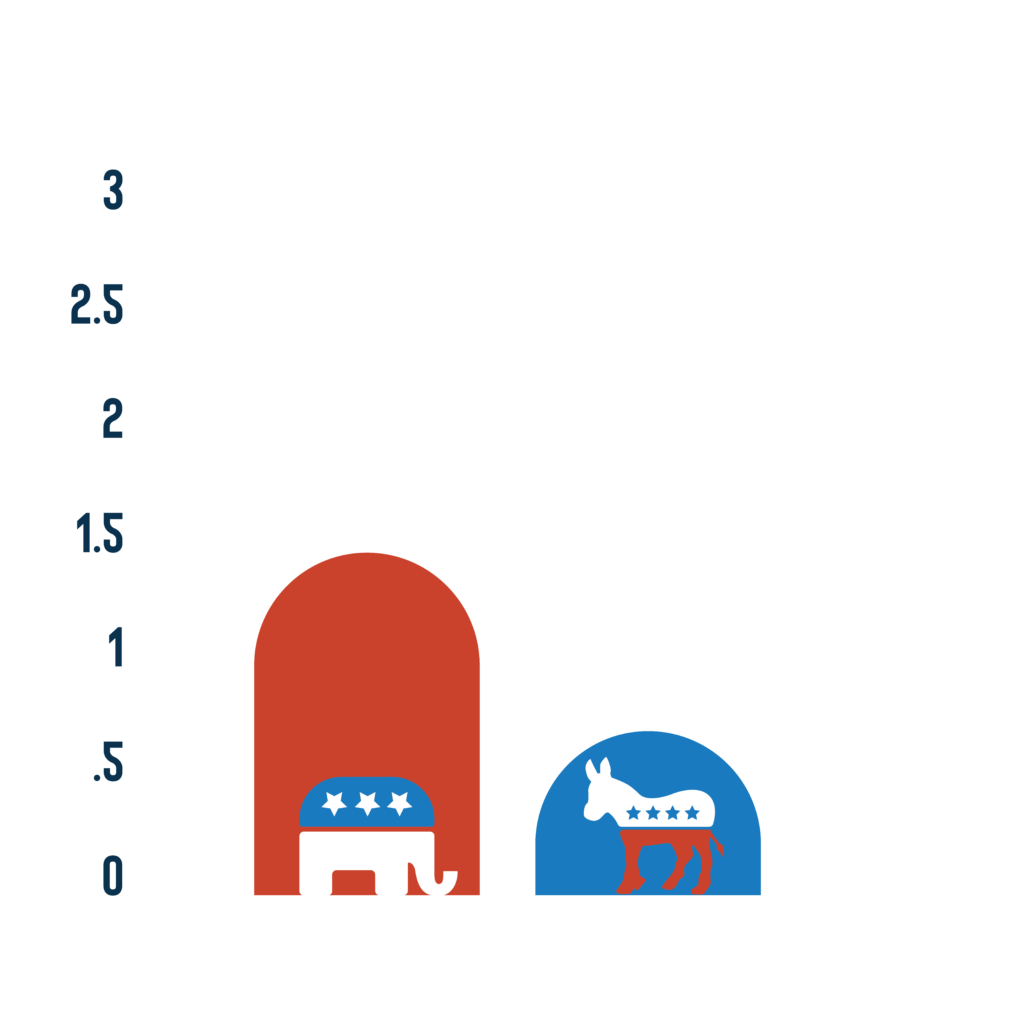
Conservative students are more likely to believe that the news favors one party over the other more than liberal students. They were asked “To what extent do you agree or disagree with the following statement? – The news media tend to favor one political side over the other.” Conservatives agreed with that belief almost twice as much as liberal students. This question was directly followed by a similar question, which merited interesting results that could expose a new layer of bias.
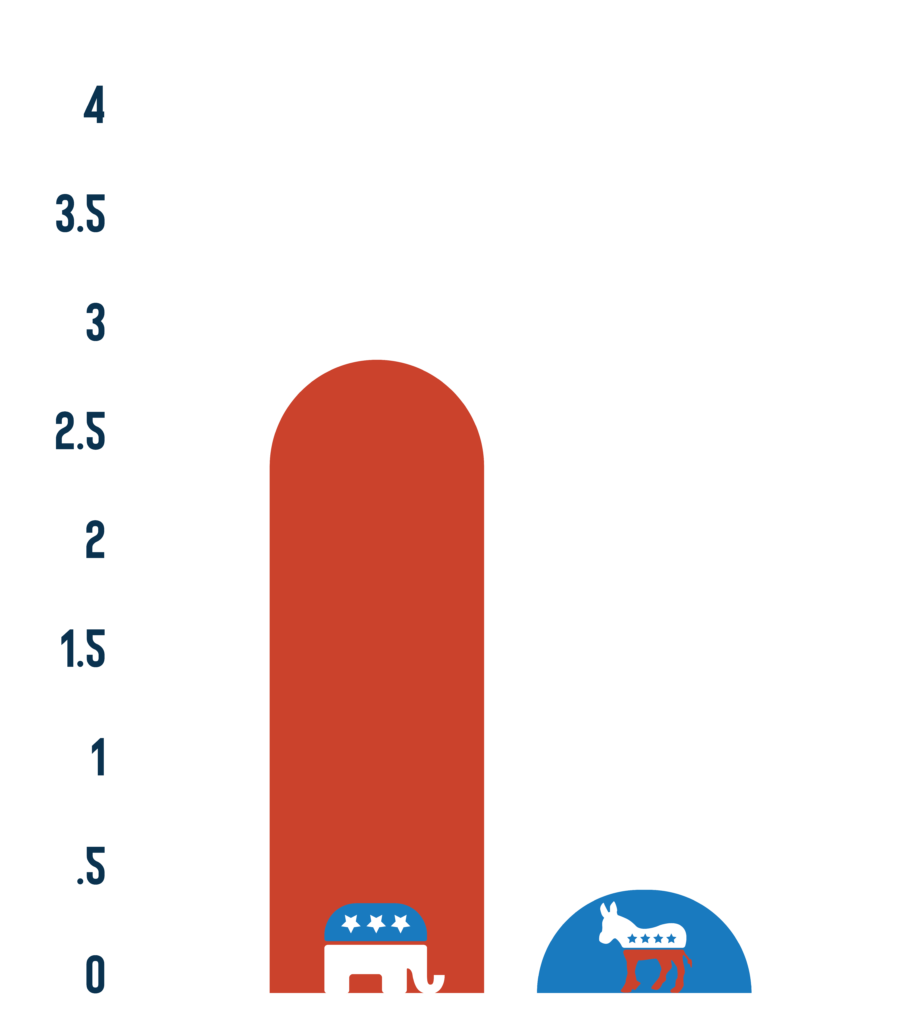
“To what extent do you agree or disagree with the following statement? – The news media are liberally biased, in general.”
The question is essentially the same as the previous one, but by using the polarizing phrase “liberally biased” the responses were subsequently also polarized.
Conservatives were 5 times more likely to say the news is liberally biased
These survey results expose an interesting view on the political understanding of BYU-Idaho students.